
Meet one of the rarest and most sought-after birds in the Atlantic Forest — and learn why finding it is never guaranteed.
There are birds that exist mostly in field guides and lore — spoken about in hushed tones at bird festivals, listed as near-mythical targets on bucket lists. The Cherry-throated Tanager is one of them.
Nemosia rourei has been recorded fewer than 30 times since its scientific description in 1870. For decades it was feared extinct. Then, in the 1990s, a small population was rediscovered in Espírito Santo, in a fragment of Atlantic Forest so remote that few birders had ever tried to reach it.
Why Is It So Rare?
The Atlantic Forest has lost over 85% of its original cover. What remains is largely fragmented — small islands of habitat surrounded by pasture, monoculture, and urban sprawl. The Cherry-throated Tanager seems to require large, structurally complex forest, the kind that barely exists anymore outside of protected reserves.
“Some days you spend eight hours in the forest and find nothing. Then, on a random Tuesday, a pair drops out of the canopy twenty meters in front of you. That's birding. That's the Atlantic Forest.”
— Caio Brito, BBE Lead Guide
What makes it even harder is the species' behavior. Unlike many Atlantic Forest endemics that respond to playback or stay in predictable microhabitats, the Cherry-throated Tanager is nomadic within its home range. It moves with mixed-species flocks through the mid-story and canopy, appearing and disappearing without warning.
Where to Look
The Caparaó region, straddling Espírito Santo and Minas Gerais, remains the best — and essentially only — place on Earth to search for this species with any realistic chance of success. Access requires a combination of planning, local knowledge, and patience.
- Target elevations between 900–1,400 m, where montane Atlantic Forest remains most intact.
- Focus searches on fruiting trees and mixed-species canopy flocks.
- Early morning (06:00–09:00) and late afternoon (15:00–17:00) are the most productive windows.
- A local expert who knows recent sightings is essential — this is not a self-guided target.
Conservation Status
The Cherry-throated Tanager is classified as Critically Endangered by the IUCN. Estimated population is fewer than 250 individuals. The primary threats are ongoing deforestation and the fragmentation of remaining forest corridors that the species depends on for movement between patches.
BBE donates a portion of every Espírito Santo and Caparaó itinerary to local reserves working to protect the remaining habitat. Responsible tourism is, at this scale, a conservation act.
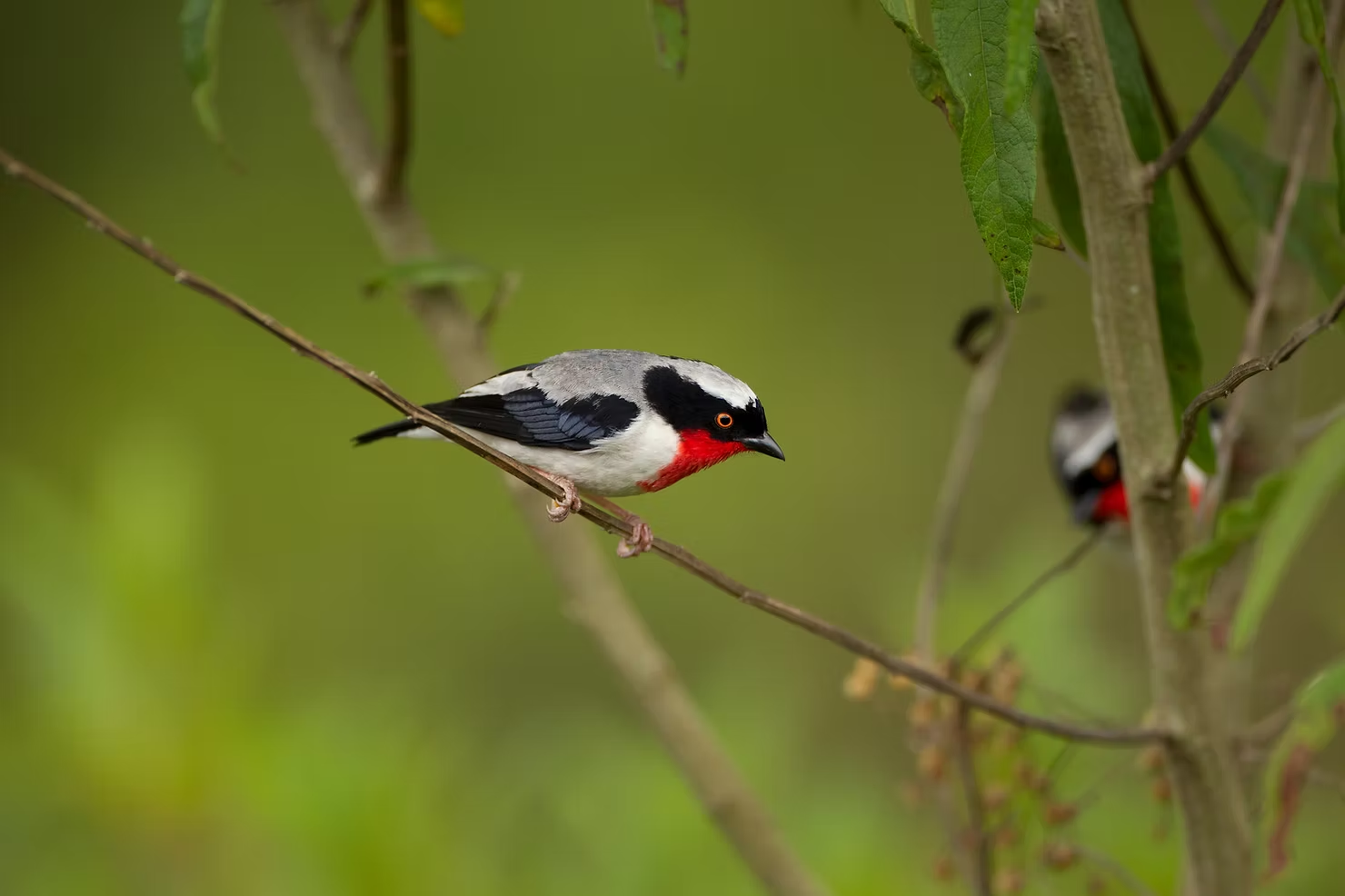
If you want to add this bird to your life list, plan carefully. Go with someone who knows the forest and the species. Be ready to wait. And when it finally appears — that flash of cherry-red against the green canopy — remember that you're looking at one of the rarest birds alive.

Lead Guide & Ornithologist
Expert guide and ornithologist at Brazil Birding Experts, specializing in the region's most sought-after endemic species and habitats.
See posts by Caio Brito (1)